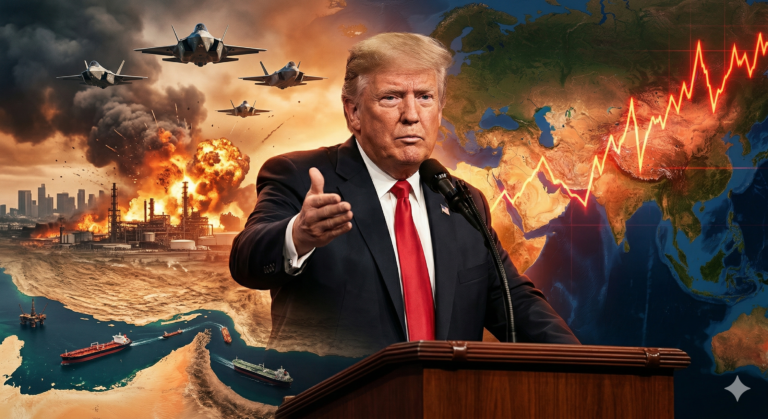
Three Key Takeaways
Iran and the United States have agreed to a two-week ceasefire brokered by Pakistan, with talks set to begin in Islamabad and limited passage through the Strait of Hormuz expected to resume.
The truce reflects the rising cost of continued escalation for both sides, especially the disruption to oil, shipping, insurance, and wider supply chains tied to Hormuz.
This is not a final peace settlement. Core disputes over sanctions, Iran’s nuclear program, regional proxies, and the scope of the ceasefire remain unresolved, while Israel has made clear that Lebanon is not covered.
News
Iran and the United States have agreed to a two-week ceasefire after a last-minute diplomatic push led by Pakistan. Iranian officials say talks with Washington will begin in Islamabad on Friday, while Pakistan’s Prime Minister Shehbaz Sharif said President Masoud Pezeshkian confirmed Iran’s participation. The agreement was reached after nearly six weeks of war and just ahead of a U.S. deadline tied to the reopening of the Strait of Hormuz.
The ceasefire is provisional rather than permanent. Iran’s ambassador to the United Nations in Geneva said Tehran would approach the talks cautiously and keep its military on alert, reflecting continued distrust after weeks of fighting. At the same time, Washington has paused further escalation while pushing for negotiations to continue.
The Strait of Hormuz remains central to the entire arrangement. Iranian officials have indicated that safe passage through the waterway could resume in a controlled form in time for the talks, a major development for global energy and shipping markets after weeks of disruption.
Background
How the ceasefire came together
The truce did not emerge from a sudden breakthrough. It came after both sides reached the point where further escalation was becoming more costly than a temporary pause.
For Washington, a prolonged Hormuz crisis risked pushing oil prices higher, worsening shipping bottlenecks, and increasing pressure from allies worried about energy flows and market instability. For Tehran, continued confrontation risked deeper infrastructure damage, heavier economic strain, and more military pressure. That is why the agreement looks less like a peace deal and more like a short operational pause before the next round of bargaining.
Why Pakistan became the mediator
Pakistan’s role makes sense when viewed through geography and diplomacy together. It borders Iran, has working channels with the United States, and maintains relevance across the broader Muslim world. That combination gave Islamabad enough distance to act as a mediator without being seen as completely detached from the conflict.
Pakistan also had its own reasons to act. A longer crisis in Hormuz would hit South Asia through higher energy costs, shipping disruption, and wider regional instability. Hosting talks in Islamabad also gives Pakistan a chance to strengthen its diplomatic profile as a crisis manager in a region where middle powers are becoming more important.
Why this remains fragile
The ceasefire has reduced the immediate risk of a much larger U.S. strike, but it has not resolved the underlying issues. Iran’s nuclear program, sanctions relief, missile capabilities, and the future security architecture of the Gulf all remain open. There were also reports of fresh attacks in Iran and Gulf Arab states only hours after the truce was announced.
Analysis
This is a pause in escalation, not the end of the war
The most important point is that the ceasefire freezes momentum, not the conflict itself. Both sides needed room to claim they had not lost. The White House can argue that military pressure forced Iran back toward negotiations, while Tehran can argue that it survived a large-scale confrontation without regime collapse. That overlap made a short truce possible.
That is why the ceasefire should be understood as an extension of the war by diplomatic means, not as a clean break from it. The core disputes were deferred, not settled.
Israel supports the pause, but not the full scope of de-escalation
One of the biggest reasons the ceasefire remains unstable is Israel’s position. Prime Minister Benjamin Netanyahu’s office backed Trump’s two-week pause on strikes against Iran, but Israel also made clear that Lebanon is not included. Reuters further reported that Hezbollah paused attacks, while Israel said operations in Lebanon would continue.
That matters because it creates a structural mismatch inside the broader anti-Iran front. Washington wants to open a negotiating window. Iran wants time to preserve regime stability and regain leverage. Pakistan wants a diplomatic success. Israel, however, does not want a pause in Lebanon to constrain its campaign against Hezbollah. This means the direct U.S.-Iran confrontation may cool while a connected regional front stays active.
Iran’s government may be more visible, but that does not mean hard-liners have lost control
Another easy point to miss is the balance between Iran’s formal government and the Islamic Revolutionary Guard Corps. President Pezeshkian and his government have become more visible because a ceasefire, diplomacy, and maritime discussions all require an official state channel. Japan’s Prime Minister Sanae Takaichi, for example, held a phone call with Pezeshkian to discuss Middle East stability and secure shipping through Hormuz.
But greater diplomatic visibility is not the same as a transfer of power. AP reported that domestic hard-liners reacted angrily to the ceasefire, and anti-American and anti-Israeli protests continued in Tehran. That suggests a system in which the government is the diplomatic face while hard-line security actors still retain major veto power.
The Strait of Hormuz may reopen, but it will not return to its old meaning
Even if limited shipping resumes, Hormuz is unlikely to be seen in the same way as before. The latest crisis has reinforced the idea that the strait is not just a shipping lane but a political pressure point that can be managed, threatened, and priced as part of wider strategic bargaining. Reports have also highlighted debates over shipping fees and the legal status of transit, showing how maritime access itself is becoming politicized.
That matters because markets do not normalize the moment a ceasefire is announced. Hapag-Lloyd said a return to normal shipping conditions would take six to eight weeks once the Middle East stabilizes, and the company said the crisis was still costing it tens of millions of dollars per week. In other words, even if the route is open, the costs of risk, delay, and uncertainty remain.
Trump’s ceasefire decision also carries a domestic political logic
The military and diplomatic pressures were real, but domestic politics also matter. With the November 2026 midterm elections ahead, a prolonged Hormuz crisis would mean higher fuel costs, more market stress, and more criticism from allies and voters. A short truce gave Trump a chance to shift the narrative from open-ended escalation to a claim that he used force to create leverage and then avoided a wider war. AP reported that Trump framed the move as a strategic success after concluding that a proposed framework from Iran was “workable.”
This does not mean the ceasefire was only about electoral politics. It means domestic political timing, oil-market stability, alliance management, and military limits all pushed in the same direction at once.
Why this matters for Japan and Asia
For Japan and other Asian import-dependent economies, this story is not just about diplomacy in the Middle East. It is about how quickly a strategic chokepoint can disrupt oil, LNG, shipping schedules, insurance premiums, and industrial planning. Reuters reported that Japan gets about 90% of its oil from the region, which helps explain why Tokyo moved quickly to urge Iran to secure maritime traffic after the ceasefire.
The broader lesson is that energy security is no longer just about commodity prices. It is increasingly about whether routes remain usable, insurable, and politically stable enough to support the wider trading system.
Conclusion
The two-week ceasefire between Iran and the United States is better understood as a fragile bridge than as a final settlement. The U.S. has paused escalation without abandoning pressure. Iran has accepted talks without giving up its core positions. Pakistan has emerged as a consequential mediator. Israel has supported the pause while narrowing its scope. And the Strait of Hormuz has become even more clearly a geopolitical lever with global economic consequences.
That is why the coming Islamabad talks matter far beyond one bilateral dispute. What happens next will shape not only U.S.-Iran relations, but also shipping risk, energy prices, regional deterrence, and the future political meaning of one of the world’s most important waterways.
Reference Links
- US and Iran agree to truce; Iranian official says strait could open in time for talks on Friday(Reuters)
- Pakistan PM Sharif says Pezeshkian has confirmed Iran’s participation in Islamabad talks(Reuters)
- Trump says he agrees to suspend bombing of Iran for two weeks(Reuters)
- Israel backs Trump’s two-week pause on Iran strikes, says Lebanon excluded(Reuters)
- Hezbollah pauses attacks, sources say, Israel says operations in Lebanon continue(Reuters)
- Japan PM urges Iran to secure Hormuz shipping after ceasefire(Reuters)
- Hapag-Lloyd says a return to normal shipping will take 6-8 weeks once Middle East stabilises(Reuters)