Key Takeaways
Iranian President Masoud Pezeshkian has rejected President Donald Trump’s demand for “unconditional surrender,” signaling that the war is entering a more dangerous stage rather than moving toward de-escalation.
The current crisis did not emerge overnight. It is the product of a long chain of conflict that includes the 1979 Islamic Revolution, the collapse of trust over Iran’s nuclear program, Israel’s long confrontation with Iran-backed armed groups, and the regional spillover of the Gaza war.
The real question is no longer whether the fighting can be paused quickly. The bigger issue is whether Iran, after the killing of Ali Khamenei, can still function as a coherent state while facing internal succession struggles, military decentralization, and rising economic pressure across the region.
News Overview
CNN reported on March 7 that Iranian President Masoud Pezeshkian declared on state television that Iran would “never surrender.” His statement came less than a day after President Donald Trump said there would be no negotiations unless Iran accepted unconditional surrender. Pezeshkian’s message was a direct rejection of that demand and a sign that Tehran intends to frame the conflict as a struggle for national survival rather than a bargaining process.
At the same time, the war has already entered its second week. Iranian strikes have widened beyond Israel to include attacks linked to Gulf states, even as Pezeshkian suggested Tehran could hold back from further retaliation if neighboring countries do not serve as platforms for attacks on Iran. Trump, however, has continued to insist that unconditional surrender is the only acceptable outcome. That combination has sharply narrowed diplomatic space.
Why This Crisis Did Not Begin in 2026
To understand the current war, it is necessary to go back to 1979. The Islamic Revolution transformed Iran from a pro-American monarchy into an Islamic Republic built around anti-Western and anti-Israeli legitimacy. The seizure of the U.S. Embassy in Tehran and the hostage crisis turned hostility toward Washington into a defining feature of the new state. From that point on, confrontation with the United States was not just foreign policy. It became part of the regime’s identity.
This is also why the current leadership cannot easily accept the language of surrender. For the Islamic Republic, compromise under military pressure does not look like normal diplomacy. It looks like ideological defeat. That is one reason why even after the loss of its supreme leader, Iran is still presenting resistance as a political necessity.
The Regional Structure Behind the War
The Middle East is often described through religion alone, but religion is only part of the story. The region’s conflicts also reflect state survival strategies, ethnic rivalries, energy geography, and great-power intervention. Iran is not only the most powerful Shia-majority state. It is also a Persian state operating in a largely Arab regional order, which has long shaped its rivalry with Sunni powers such as Saudi Arabia.
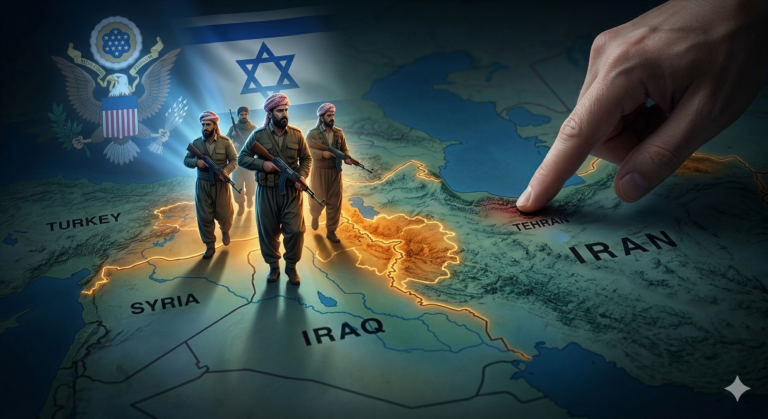
Over time, Tehran developed a strategy of pressure through armed partners rather than direct conventional war. Hezbollah in Lebanon, Hamas in Gaza, the Houthis in Yemen, and Iran-aligned militias in Iraq and Syria formed a broader regional deterrent network. For Iran, this reduced the risk of making its own territory the first battlefield. For Israel, it meant that conflict on multiple frontiers increasingly pointed back to Tehran.
The Nuclear Issue and the Collapse of Containment
The nuclear issue made this rivalry even more dangerous. The 2015 nuclear deal was designed to limit Iran’s nuclear activity in exchange for sanctions relief, but the U.S. withdrawal from that agreement under Trump in 2018 destroyed what remained of a fragile framework for control. Since then, mistrust has deepened, Iran’s nuclear activities have expanded, and pressure politics has returned to the center of Washington’s approach.
That is why Trump’s current demand for unconditional surrender matters so much. It is not an isolated remark. It is the most extreme expression of the same “maximum pressure” logic that has shaped U.S. policy toward Iran for years. The difference now is that military escalation has replaced coercive diplomacy as the main instrument.
Why Iran Did Not Collapse After Khamenei’s Killing
One of the most important developments of the past week is that Iran did not immediately break apart after the killing of Ali Khamenei and other senior commanders. Reuters has reported that the Islamic Revolutionary Guard Corps has tightened its role in wartime decision-making even after losing top figures, suggesting that command authority had already been distributed more widely before the strike.
This points to a larger structural reality. Iran appears to have built a wartime system in which lower-level commanders and regional military units can continue operating even if the top leadership is decapitated. That makes the state more resilient in the short term, but it also creates a serious escalation risk. Political leaders may want flexibility, but decentralized military actors can keep the war going.
The Interim Leadership Council and the Succession Struggle
After Khamenei’s killing, Iran moved under an interim three-member leadership arrangement that includes President Pezeshkian, Chief Justice Gholam-Hossein Mohseni-Ejei, and cleric Alireza Arafi. Reuters reports that this arrangement is tied to wartime succession management, but it is not a sign of stability so much as an emergency mechanism to keep the system functioning while a longer-term decision is delayed.
The deeper issue is succession. Competing factions are now trying to shape the post-Khamenei order. Reuters has identified Mojtaba Khamenei as one possible figure in that struggle, while hardline clerics have pressed for a quick decision on a new supreme leader. The outcome matters enormously. A harder-line successor could intensify confrontation with the United States and Israel, while even a more pragmatic figure would still face the growing influence of the Revolutionary Guards.
Why Russia and China Will Not Fully Rescue Iran
Russia and China have criticized the U.S.-Israeli attack, but neither appears willing to absorb major costs to save Iran outright. Reuters reporting suggests that both powers see strategic value in Iran’s resistance while keeping their own exposure limited. Russia benefits from higher energy prices and from any diversion of Western attention and resources away from Ukraine. China wants Iran to survive, but not at the cost of broader instability that could endanger its trade and energy relationships across the Gulf.
That means Iran’s external partnerships are real but limited. Moscow and Beijing can help Iran avoid total isolation, but they are not offering the kind of military backing that would fundamentally change the balance of the current war. In practice, Iran remains strategically useful to both powers, but still largely alone when it comes to direct confrontation.
Why Domestic Anger Has Not Become Regime Change
Outside observers often assume that military pressure on the regime will automatically trigger a popular uprising. That assumption remains weak. Reuters has reported that U.S. officials themselves are skeptical that Khamenei’s killing will quickly produce regime change in Tehran. The reason is not that public frustration is absent. It is that fear of state collapse, civil fragmentation, and prolonged chaos remains extremely strong.
Many Iranians may oppose the current order, but that does not mean they see a credible and organized alternative ready to govern. The memory of repression, the weakness of opposition coordination, and the risk of wider internal conflict all discourage immediate mass mobilization. In that sense, external strikes can weaken the regime while also reinforcing public fear of what comes next.
The Global Economic Impact Is Already Here
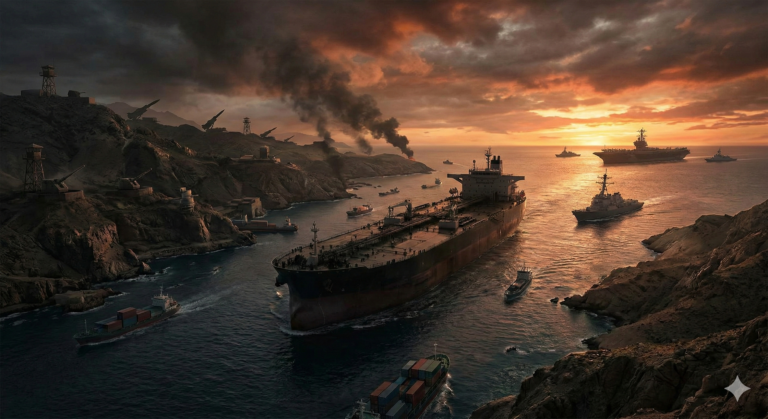
This war is not only about military balance in the Middle East. It is already an energy and inflation story for the wider world. Reuters reported on March 7 that roughly one-fifth of global crude oil and natural gas supply had been suspended by disruption linked to the conflict, especially around the Strait of Hormuz. Oil prices jumped 24% in a week and moved above $90 per barrel.
That matters far beyond the region. Higher energy prices feed directly into transportation costs, electricity prices, industrial inputs, and consumer inflation. For import-dependent economies in Asia, including Japan, the crisis is a direct economic threat rather than a distant geopolitical event. The conflict is already reshaping market expectations, inflation risks, and political calculations in multiple countries.
Conclusion
The killing of Ali Khamenei removed the head of the Iranian system, but it did not stop the machinery beneath it. Iran’s Revolutionary Guards, regional proxy network, and distributed military structure continue to function, even as the political center becomes more fragile. What has emerged is not a clean transition, but a dangerous overlap of succession uncertainty, military decentralization, domestic fear, and widening regional war.
That is why this conflict should not be understood as a short-term exchange of strikes. It is a structural crisis inside the Islamic Republic, a turning point in the balance between clerical authority and military power, and a major test for the regional order built around energy flows, Gulf security, and U.S. influence. The question is no longer only whether Iran will surrender. The real question is what kind of Middle East will emerge if a wounded but still armed Iran refuses to do so.
Reference links
- Iran war threatens a prolonged hit to global energy markets(Reuters)
- Trump demands Iran’s ‘unconditional surrender,’ complicating diplomatic paths(Reuters)
- Khamenei killing shatters Iran’s order, triggers high-stakes succession race(Reuters)
- Iran’s Revolutionary Guards take wartime lead, ensuring harder line, sources say(Reuters)
- Mojtaba Khamenei, seen as possible next Supreme Leader, has survived assault on Iran, sources say(Reuters)
- Iranian hardline clerics seek swift naming of new supreme leader(Reuters)
- Iran’s War With Israel and the United States(Council on Foreign Relations)