Democracy Tested by Martial Law and Insurrection
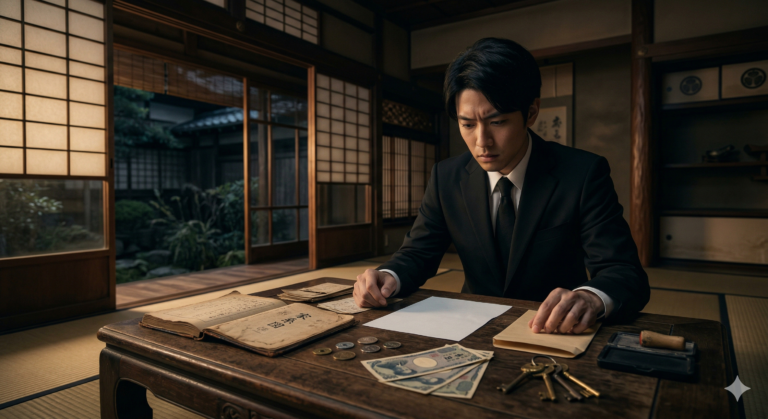
On February 19, 2026, the Seoul Central District Court sentenced former South Korean President Yoon Suk Yeol to life imprisonment on charges of insurrection, in connection with the December 2024 martial law crisis.
The court ruled that Yoon’s declaration of emergency martial law, followed by the mobilization of military and police forces aimed at suspending the functioning of the National Assembly, constituted a grave violation of the constitutional order.
Prosecutors had sought the death penalty. However, the court opted for life imprisonment. Yoon’s legal team has announced its intention to appeal. The verdict marks one of the most severe criminal sentences ever imposed on a former head of state in South Korea’s post-democratization era.
Source: Reuters
Background: What Led to the Crisis?
The origins of this unprecedented crisis trace back to December 2024, when President Yoon abruptly declared emergency martial law amid escalating political deadlock.
At the time, South Korea was governed under a divided structure: a conservative president facing a National Assembly dominated by the liberal opposition. Budget disputes and legislative confrontations had intensified, significantly constraining the administration’s governing capacity.
In a televised address, Yoon accused opposition lawmakers of paralyzing state functions and labeled them “anti-state forces.” Framing the situation as a national emergency, he invoked constitutional provisions allowing for the declaration of martial law.
Under the South Korean Constitution, martial law grants the president expanded authority over military and police forces during extraordinary national crises, such as war or large-scale armed rebellion. It may also restrict civil liberties, including freedom of assembly and press.
However, using such emergency powers in the context of domestic political confrontation triggered immediate controversy.
Why Was It Deemed Insurrection?
The central issue in the criminal trial was not the existence of martial law as a constitutional mechanism, but the specific actions undertaken under its authority.
Under South Korean criminal law, insurrection refers to the organized use of force aimed at disrupting or subverting the constitutional order. A successful regime change is not required. The decisive factor is whether physical force was deployed against constitutional institutions.
In this case, armed troops were transported by helicopter to the National Assembly compound. Plans reportedly included detaining key political figures. The court determined that these actions crossed the legal threshold from executive authority to unconstitutional organized force.
The judiciary concluded that once military power was used to obstruct the legislature, the matter ceased to be a political judgment and became a criminal violation of constitutional order.
Impeachment and Criminal Liability
The aftermath unfolded in two distinct phases: political accountability and criminal responsibility.
First, the National Assembly passed an impeachment motion on December 14, 2024. In April 2025, the Constitutional Court upheld the impeachment, formally removing Yoon from office. Impeachment is a constitutional mechanism to determine fitness for office; it does not impose criminal punishment.
Subsequently, prosecutors pursued criminal charges against Yoon as a private citizen. The life sentence handed down in February 2026 represents the culmination of that judicial process.
In-Depth Analysis: The Limits of Democratic Power
When Did Constitutional Authority Become Criminal Force?
The core legal debate centered on identifying the moment at which constitutionally granted authority transformed into insurrection.
South Korean legal precedent, including rulings from the 1997 trials of former military leaders Chun Doo-hwan and Roh Tae-woo, establishes that insurrection begins when organized physical force is deployed against constitutional order.
In the present case, the deployment of armed troops to the National Assembly and attempts to detain elected officials were deemed sufficient to constitute the initiation of insurrection. The success or failure of the attempt was legally irrelevant. What mattered was the use of force against a constitutional institution.
The ruling draws a clear boundary: emergency powers do not authorize military intervention against the legislature.
Why Did Democratic Institutions Hold?
The crisis revealed both the fragility and resilience of South Korea’s democratic system.
Despite the late hour, lawmakers convened and voted to lift martial law. The legislature continued to function under intense pressure. Citizens rapidly mobilized in protest as information spread through social media, limiting the possibility of opaque power consolidation.
International factors also played a role. Expressions of concern from the United States and other allies introduced geopolitical constraints. Within the military and police, hesitation emerged regarding the legality of orders, preventing further escalation.
Unlike the authoritarian period of the 1980s, contemporary South Korea operates within a dense network of institutional and international checks. These layers contributed to preventing systemic collapse.
The Judiciary’s Message
By sentencing a democratically elected former president to life imprisonment, the court delivered a clear institutional message: no public office places its holder above the constitution.
The decision to impose life imprisonment rather than the death penalty was also significant. South Korea has maintained a longstanding de facto moratorium on executions since 1997. A death sentence could have risked political martyrdom and intensified polarization. Life imprisonment preserves legal accountability while avoiding symbolic escalation.
Heavy sentences for senior military and police officials reinforced another principle: obedience to orders does not excuse unconstitutional conduct. This reaffirmed civilian control and institutional responsibility.
Conclusion: A Test of Democratic Limits
The Yoon Suk Yeol crisis demonstrated that democratic systems are not self-sustaining. Even elected leaders can strain constitutional boundaries under conditions of deep polarization.
Yet the episode also showed that when legislative institutions, courts, civil society, and international constraints function within their respective roles, authoritarian overreach can be contained.
South Korea now faces longer-term structural questions: how to clarify emergency executive powers, how to reinforce separation of powers, and how to address persistent political division.
The verdict represents not only the resolution of a crisis, but the beginning of a broader constitutional reckoning about the limits of executive authority in a polarized democracy.
References
South Korea court sentences former President Yoon Suk Yeol to life for insurrection(Reuters)
South Korea’s former president Yoon Suk Yeol jailed for life for leading insurrection(The Guardian)
South Korean Ex-President Sentenced to Life in Prison for Insurrection(TIME)
South Korea: President Impeached for Abuse of Power(Human Rights Watch)