Three Key Takeaways
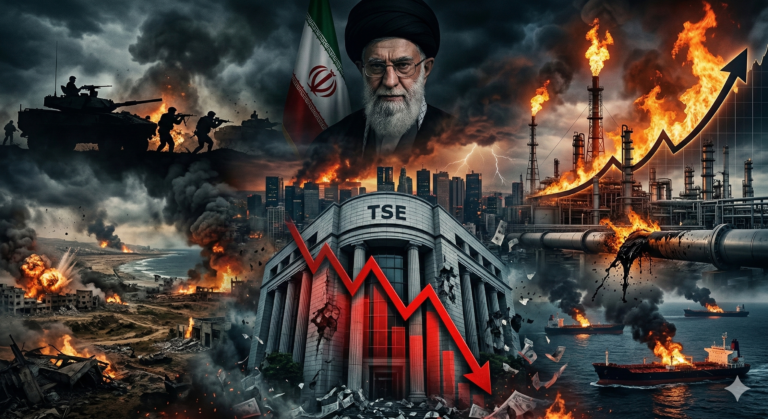
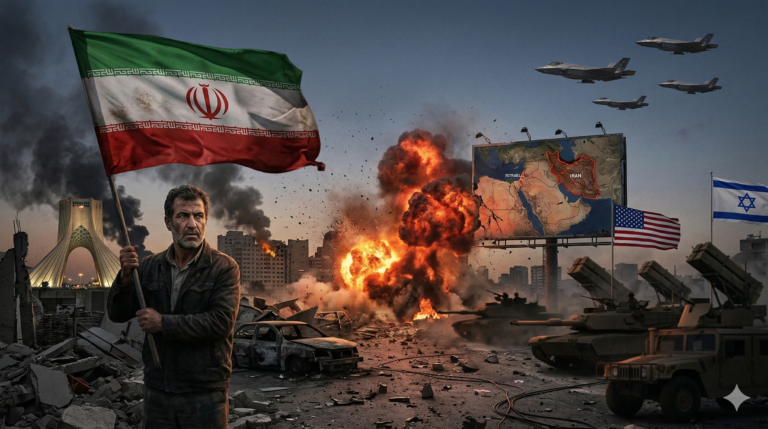
- President Donald Trump told CBS that the war with Iran was “very complete, pretty much,” but attacks and military signaling continued on the ground, suggesting the conflict had not ended as cleanly as the phrase implied.
- The statement appears to have had a strong political and market function. Oil prices fell sharply after Trump signaled de-escalation, at a time when the White House is also looking ahead to a late-March China summit and the November midterm elections.
- Iran’s ability to launch a full-scale reversal appears limited, but that does not mean it is out of options. Even after heavy damage, Tehran still appears capable of sustaining a war of attrition through missiles, drones, and pressure on regional energy flows.
News
President Donald Trump told CBS that the war with Iran was “very complete, pretty much,” signaling that he sees the military campaign as close to finished. He also said the United States had ample options to deal with the Strait of Hormuz, reinforcing the message that Washington believes it retains escalation dominance.
Markets responded quickly. Oil prices, which had surged on fears of a prolonged regional supply shock, fell sharply after Trump predicted de-escalation. But the battlefield picture remained far more complicated. Iranian pressure on energy infrastructure and regional routes continued, while U.S. and allied messaging still suggested that the war had not reached a clean endpoint.
Background
How the war reached this point
The current war began on February 28, when coordinated U.S. and Israeli strikes hit Iran’s military and political infrastructure. Since then, the conflict has evolved from an opening shock campaign into a broader contest over endurance, retaliation, and economic pressure. Rather than producing immediate collapse, the strikes appear to have pushed Iran deeper into wartime consolidation.
That matters because the core issue is no longer just whether the first round of strikes succeeded tactically. The larger question is whether those strikes created a path to political resolution, or simply opened a new phase of conflict in which both sides are now trying to shape the narrative of success. Trump is emphasizing closure. Iran is emphasizing survival. Those are not the same thing.
Why Trump is signaling closure now
Trump’s wording makes more sense when viewed as a political and market message rather than as a literal battlefield summary. After his comments, oil prices dropped sharply, reflecting market hopes that the worst-case scenario for supply disruption might be avoided. That reaction alone helps explain why the administration would want to project control, speed, and closure.
The timing is also important. Trump is scheduled to travel to China from March 31 to April 2, and the White House is already operating in the shadow of the November midterm elections. A prolonged war, rising gasoline prices, and a weak stock market would all create political costs. A short war framed as decisive leadership would be far easier to sell domestically and diplomatically.
Public opinion adds another layer of pressure. A Reuters/Ipsos poll found that most Americans expected gasoline prices to keep rising after the Iran strikes, while support for the military action remained limited. That means the administration has strong incentives to present the conflict as contained before it turns into a broader domestic liability.
Why decapitation did not produce collapse
A central assumption behind the opening phase of the campaign was that striking Iran’s top leadership and command structure could trigger rapid internal breakdown. So far, that has not happened. Iran’s political-military system appears to have more institutional depth than that scenario assumed. The Revolutionary Guards, internal security bodies, and hardened command networks seem to have preserved enough coherence to prevent immediate state unraveling.
In practical terms, that means leadership losses do not automatically translate into surrender. A system built around layered security organs and wartime continuity can absorb shocks longer than outside planners sometimes expect. Instead of producing quick capitulation, decapitation pressure may have reinforced the regime’s internal logic of survival and retaliation.
Iran’s retaliation is weaker, but not gone
Iran does not appear to have the capacity for a clean military comeback. It has taken major damage, and its ability to reverse the war outright looks constrained. But that is not the same as saying it is strategically finished. Reuters reports that Iran is now leaning into endurance and energy disruption, betting that it can outlast Washington and Jerusalem politically even if it cannot defeat them conventionally.
This distinction is crucial. Iran may still retain a meaningful number of missiles and drones, but usable capability depends on more than stockpiles. Launch platforms, related facilities, command links, logistics, and movement corridors all matter. If those systems are degraded, Iran can still strike, but not necessarily at the same tempo or scale as before. That points toward a drawn-out pattern of intermittent attacks, economic intimidation, and strategic nuisance rather than a dramatic battlefield reversal.
The Strait of Hormuz remains the real strategic lever
Iran’s most effective remaining leverage may not be territorial gain, but disruption. Pressure on the Strait of Hormuz, Gulf energy assets, and maritime confidence can raise costs far beyond the battlefield itself. Even when physical closures are partial or temporary, the mere risk premium can shake oil prices, shipping calculations, and investor sentiment.
That is why Trump’s message matters so much. If Washington can persuade markets that the war is ending, it can reduce one of Iran’s biggest strategic advantages. If Iran can keep the region looking unstable enough, it can continue imposing costs even without a decisive military breakthrough. In that sense, the fight is no longer only about missiles. It is also about credibility, expectations, and who gets to define what “ending” means.
The shadow fleet and the limits of pressure
Another reason Iran may be able to sustain pressure longer than expected is that sanctions do not automatically sever its economic lifelines. Even under heavy pressure, Iranian oil has continued moving through opaque shipping networks and indirect trade channels, particularly toward China. That gives Tehran a degree of financial resilience that complicates any theory of quick exhaustion.
This creates a dilemma for Washington. If the United States moves too aggressively against those channels, it risks pushing oil prices higher and worsening the domestic inflation and fuel-cost problem. If it does too little, Iran retains the resources to keep fighting. That contradiction helps explain why the political desire for a fast end may be stronger than the practical ability to force one.
Bombing nuclear infrastructure does not end the nuclear issue
One of the strategic aims of the campaign has been to degrade Iran’s nuclear-related capabilities. But even a successful strike on facilities does not erase technical knowledge, accumulated expertise, or the political logic that drives nuclear decision-making. A recent LSE analysis argues that the war may push Iran from latent nuclear capability toward what it calls a “nuclear grievance” mindset, in which the perceived lesson of the conflict is that only an actual deterrent can prevent repetition.
If that reading is correct, then a short-term operational success could generate a longer-term strategic failure. A campaign designed to delay proliferation could strengthen the internal case for weaponization later. That would make the war look less like a final solution and more like a dangerous reset.
The domestic political risk is bigger than the battlefield alone
There is also a growing risk that the war will be judged not only by military outcomes but by civilian costs, legal questions, and the perception of strategic drift. Reporting on the school strike in Minab has not produced a universally settled final conclusion, but the incident is already politically dangerous because it sharpens scrutiny of civilian harm and of the administration’s broader war narrative. Where public attention moves from battlefield success to moral and procedural legitimacy, political support can erode quickly.
That helps explain the urgency of Trump’s framing. If the war can be defined early as successful and nearly finished, then questions about duration, costs, legality, and unintended consequences become easier to contain. If the conflict drags on, those questions grow harder to suppress.
Conclusion
The most important point is that Trump’s “very complete, pretty much” line should not be read as a clean statement of battlefield reality. It is better understood as a political attempt to impose closure on a conflict that is still evolving. The market reaction showed why that message was useful. The continued attacks and strategic pressure showed why it may be premature.
Iran does not look capable of a dramatic reversal, but it still appears capable of preventing a neat American victory narrative. That alone may be enough to keep oil, shipping, and regional security under strain. The war may be moving past its opening phase, but it is not yet settled. What comes next will depend less on who can declare success first, and more on who can bear the longer economic, political, and strategic burden.
Reference Links
- Trump says war against Iran is ‘very complete,’ CBS News reports(Reuters)
- Oil prices sink 13% as Trump predicts Middle East de-escalation(Reuters)
- Iran bets on endurance, energy disruption to outlast US, Israel(Reuters)
- Americans expect gasoline prices to keep rising after Iran strikes, Reuters/Ipsos poll finds(Reuters)
- Trump to travel to China next month, with US tariffs in focus(Reuters)
- Trump’s China visit likely won’t yield breakthrough, aims to maintain stability(Reuters)
- Iran War: Latest Breaking News, Updates & Analysis(Reuters)
- Trump says “the war is very complete,” and he’s considering taking over Strait of Hormuz(CBS News)