Three Key Takeaways
- The United States and Iran held about 21 hours of ceasefire talks in Islamabad on April 12, 2026, but failed to bridge differences over Iran’s nuclear program and the future of the Strait of Hormuz.
- The US military said it would begin blocking maritime traffic entering or leaving Iranian ports from 10:00 a.m. Eastern Time on April 13. This is not a full closure of the Strait of Hormuz itself, but a more limited pressure campaign aimed at Iran’s maritime access.
- Although the measure is narrower than a total strait shutdown, the situation remains unstable. The talks expanded beyond a simple ceasefire extension and turned into a broader struggle over postwar terms, leaving the region in an uneasy middle ground between full war and full peace.
News
The United States and Iran held ceasefire talks in Islamabad, Pakistan, on April 12, 2026, but failed to reach an agreement after roughly 21 hours of negotiations. The meeting was intended to extend the two week ceasefire announced on April 7 and explore terms for a broader end to the fighting. However, major differences remained over Iran’s nuclear program and the future management of the Strait of Hormuz.
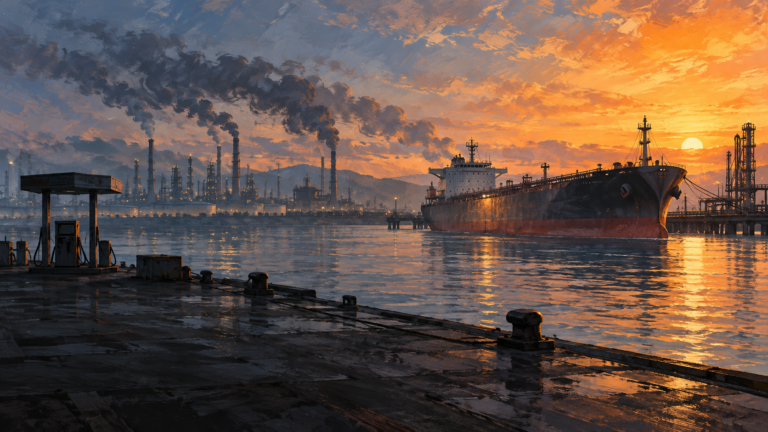
After the talks collapsed, US Central Command announced on April 12 that it would begin blocking maritime traffic entering or leaving Iranian ports at 10:00 a.m. Eastern Time on April 13. The US said freedom of navigation for vessels heading to non-Iranian ports would not be blocked, but the move still signaled a serious escalation in maritime pressure.
According to Reuters and other reports, oil tankers had already started avoiding the Strait of Hormuz ahead of the announced enforcement. Even without a full closure of the strait, tensions have spread across shipping and energy markets.
Related Articles
Background
Why the Talks Dragged On
These talks were formally about extending a ceasefire, but in practice they had already expanded into a negotiation over the shape of a possible postwar order.
The US side focused on how far Iran’s nuclear activity would be restricted. Iran, by contrast, was thinking in broader terms, including the Strait of Hormuz, transit fees, frozen assets, compensation, and the wider regional battlefield. With the agenda spread across so many issues, this was never likely to be resolved quickly.
The long negotiating session also reflected domestic constraints on both sides. Reaching an agreement requires compromise, but compromise can also look like weakness at home. The talks failed not only because the issues were difficult, but because both governments arrived with demands that were politically hard to lower.
JD Vance’s Difficult Role
US Vice President J.D. Vance was not operating only as a negotiator searching for practical middle ground. He also had to represent a White House that did not want to look soft on Iran.
A visible concession could have been framed as weakness. But failure also carried political costs, because it could make the US side look unable to extend even a temporary ceasefire.
That pressure became even stronger because there was a visible gap between President Trump’s public rhetoric and the more limited wording used in formal military announcements. Trump used stronger language, while official statements described a narrower action. In that environment, maintaining pressure could easily take priority over making a flexible compromise. Vance was negotiating not only with Iran, but also with domestic political expectations in Washington.
Why Internal Consensus Was Harder for Iran
Iran also did not appear to be operating with a single, unified line. The agenda covered not only the nuclear issue, but also the strait, transit fees, compensation, frozen assets, and the wider regional front. The broader the negotiation becomes, the harder it is to align internal actors while also bargaining externally.
Within Iran, priorities do not always line up cleanly across diplomats, political leaders, the Revolutionary Guard, and groups focused on regional power projection. A camp that wants faster economic relief may not see the issue the same way as a camp that wants to preserve leverage through control over the strait.
A larger delegation can create more flexibility in theory, but it can also make real time decision making harder. In that sense, the scale of the Iranian side may have reflected not only seriousness, but also the difficulty of consolidating a single position.
Limited Blockade, Limited War, Limited Peace
The US measure announced after the talks did not amount to a full shutdown of the Strait of Hormuz. It was framed instead as a more limited blockade focused on maritime traffic entering or leaving Iranian ports.
That distinction matters, but it does not produce stability by itself. The move suggests Washington is trying to preserve pressure on Iran without immediately widening the confrontation into a full regional maritime war.
As a result, the situation has not moved cleanly toward either full war or full peace. It is no longer a simple ceasefire extension process, but it is also not yet an open and total military confrontation. What has emerged instead is a middle condition in which both sides are trying to avoid decisive concessions while keeping as much leverage as possible.
Analysis
A Struggle Over the Postwar Order
The core dispute in Islamabad was not just about ceasefire mechanics. It was about who gets to shape the Middle East after the current round of fighting.
The United States wants to rebuild regional order around tighter limits on Iran’s nuclear capability and restored maritime access through Hormuz. Iran wants to retain influence over the strait, preserve its regional network, and keep strategic capabilities that symbolize sovereignty and deterrence.
That is why the talks ran into a hard wall. Washington was negotiating for long term control over the rules. Tehran was negotiating for survival, leverage, and room to maneuver. Once the conflict is understood that way, the collapse of the talks looks less like a diplomatic accident and more like a clash between two incompatible end states.
Hormuz Is Now an Asian Strategic Issue
Treating this crisis as a US-Iran confrontation alone misses the larger picture. The Strait of Hormuz is not only a Middle Eastern chokepoint. It is also one of the key arteries of Asia’s energy system.
For countries such as Japan, China, India, and South Korea, instability in Hormuz directly affects import security, shipping routes, insurance costs, and long term procurement planning.
This is why the current situation matters even without a full closure of the strait. A legally narrow measure can still produce a broad practical effect if shipowners, insurers, and charterers conclude that the route is too risky. The most important question is no longer just whether the strait is physically open. It is who can exercise effective control over one of the world’s most important maritime corridors.
Allied Hesitation Reveals a US Constraint
Washington’s ability to pressure Iran depends not only on military assets, but also on whether it can build international backing for its approach.
That is where the current situation becomes more complicated. Many US partners support freedom of navigation in principle, but are more cautious about openly supporting an American led blockade. Legal legitimacy, escalation risks, and the absence of a clear exit strategy all weaken political unity.
This matters because it separates two different kinds of power. The United States may still have the military capacity to act in and around Hormuz, but turning that action into broadly accepted international order is a different challenge. The current crisis is testing whether Washington can still do both at the same time.
Space Opens for China and Russia
The deeper the US-Iran confrontation becomes, the more room China and Russia have to expand their influence.
China gains opportunities to strengthen alternative trade, financing, and settlement channels that rely less on the US centered financial system. Russia benefits when instability in Middle Eastern supply supports its resource leverage and wider geopolitical position.
That makes this crisis bigger than a regional security issue. A pressure campaign aimed at Iran in the short term can, over time, accelerate a wider fragmentation of shipping, insurance, settlement, and resource networks in ways that do not favor the United States.
In that sense, the crisis is not just about whether Iran can be contained. It is also about whether US pressure unintentionally helps shift parts of the global order toward rival powers.
Why This Matters for Japan and Other Importers
For Japan, the danger is not only higher oil prices. It is the weakening of confidence in the route itself.
An import dependent economy can survive price volatility more easily than long term uncertainty about shipping reliability, insurance coverage, and the political conditions under which energy can move. Even if prices stabilize, the costs of rerouting, stockpiling, hedging, and renegotiating supply arrangements can continue much longer.
Asian importers face a structural dilemma here. Their security ties point toward the United States, but their resource needs require stable relations with Middle Eastern suppliers. If they align too closely with US pressure, they risk damaging energy relationships. If they remain too distant, they risk strategic ambiguity on the security side.
That is why this crisis should be read not only as an oil story, but as a broader test of how Asian states manage dependence on sea lanes governed by competing power centers.
The Realistic Offramp Is Small, Not Grand
A comprehensive peace deal still looks far away. The US is demanding far reaching constraints, and Iran is not positioned to surrender its core sources of leverage quickly.
That leaves a narrower but more realistic path: not grand settlement, but controlled retreat. The practical goal is to create mechanisms that allow both sides to step back without appearing to collapse politically.
That could mean a ceasefire extension, limited maritime safety arrangements, temporary nuclear restraint, and carve outs for humanitarian goods or selected economic transactions. None of these would solve the full conflict. But together they could reduce the risk of miscalculation while buying time for diplomacy.
The most dangerous outcome is not necessarily immediate full scale war. It is a prolonged middle state in which pressure continues, ambiguity deepens, and a local incident at sea turns into a wider confrontation before politics can catch up.
Conclusion
The collapse of the Islamabad talks exposed more than a failed ceasefire extension. It showed that the United States and Iran are working from fundamentally different visions of what the postwar Middle East should look like.
Washington wants to redefine regional order through nuclear restrictions and restored maritime access. Tehran wants to preserve influence, deterrence, and strategic bargaining power through the strait and its regional network. That gap is now being expressed through maritime pressure rather than diplomatic ambiguity.
What is being contested in Hormuz is not only the flow of oil. It is control over the rules that govern Asian energy transport, regional order, and the wider balance of power. Once allied hesitation, Chinese and Russian opportunity, and the vulnerability of import dependent economies are added to the picture, this is no longer just a Middle Eastern crisis. It is a test of who gets to shape the next layer of global order.
See you in the next article.
Reference Links
- US military says it will start blockade of all ships going to and from Iran on Monday(Reuters)
- Oil tankers steer clear of Hormuz ahead of US blockade(Reuters)
- What does a US naval blockade of Iran mean for oil flows?(Reuters)
- ASEAN foreign ministers urge US and Iran to push for permanent resolution(Reuters)
- UK will not back blockade of Strait of Hormuz, PM Starmer says(Reuters)
- Failed US-Iran talks in Pakistan raise questions about fragile ceasefire(AP News)
- Oil prices rise after the US says it would block Iranian ports starting Monday(AP News)
- Amid regional conflict, the Strait of Hormuz remains critical oil chokepoint(EIA)