Key Points
・South Korea’s Hankyoreh reported on August 21, 2026 that SK Hynix is pursuing a plan to build a memory chip fab in Miyagi Prefecture with an investment in the tens of trillions of won, while the company itself says nothing has been decided.
・Miyagi already holds an industrial site prepared for a large chip plant, left vacant when Taiwan’s PSMC walked away from a joint project with SBI Holdings in September 2024.
・Japan’s chip subsidy program requires ten or more years of continuous production, the very condition PSMC cited when it withdrew, and whether a memory maker can accept it is the clearest measure of how far this plan really is from reality.
▼ Watch this article as a video
A Korean Newspaper Reports “Tens of Trillions of Won in Miyagi”
The Hankyoreh reported exclusively on August 21, 2026 that SK Hynix is pursuing a plan to build a memory semiconductor fabrication plant in Miyagi Prefecture in northeastern Japan, with an investment on the order of tens of trillions of won. If it proceeds, the paper said, it would be the first large-scale investment by a South Korean chipmaker in a production base inside Japan.
The investment figure comes from industry sources cited in the report, not from any SK Hynix announcement. Nothing has been reported about what the plant would produce, whether DRAM or NAND, nor about process nodes, capacity, or timing. Reuters, Bloomberg, and Kyodo News all followed the story on the same day.
SK Hynix told the Hankyoreh and Bloomberg on August 20 that “any location with the necessary infrastructure could be a candidate, but nothing has been decided.” The Hankyoreh also cited a business source saying that SK Group Chairman Chey Tae-won appears to have visited the area in question recently.
Miyagi Governor Yoshihiro Murai, asked about the report on August 21, said it was “a story I know nothing about,” according to the regional daily Kahoku Shimpo.
The Korea Exchange demanded a formal disclosure from SK Hynix on the same day. In its answer, reported by the Korea Economic Daily on August 21, the company stated that it “is reviewing various options, including building additional production bases, to strengthen its memory business, but nothing has been finalized.”
According to the Hankyoreh, if the investment materializes, SK Hynix would become the third foreign company to own a semiconductor manufacturing plant in Japan, after Micron of the United States and TSMC of Taiwan.
Related Articles
From “We Have Never Considered It” to “Nothing Has Been Decided”
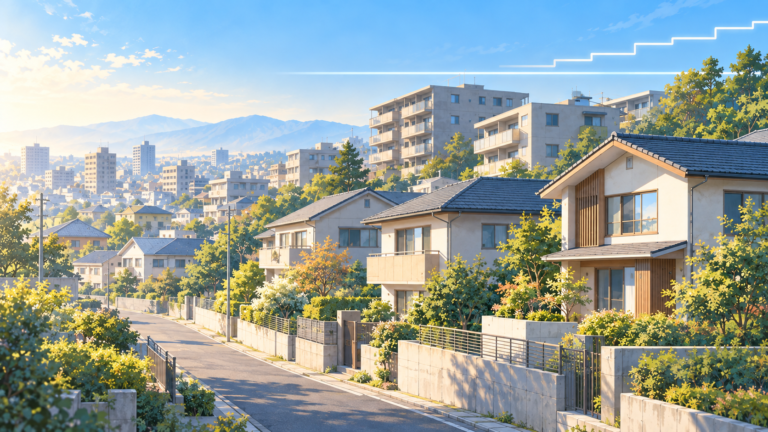
The Daini Sendai Hokubu Core Industrial Park is a prefecture-developed industrial estate in Ohira Village, Miyagi, built with heavy infrastructure for manufacturing plants. It is the site where a chip fab was supposed to rise, and where nothing was built. Understanding why matters more than the headline number.
Six months of shifting language
This report did not appear out of nowhere. The temperature has been changing since February.
| Date | Event |
|---|---|
| February 21, 2026 | The Nikkei reported that SK Hynix appeared to have approached several Japanese municipalities about candidate sites for a memory plant |
| Same day | SK Hynix denied it outright, saying it “had never considered the matter” |
| June 10, 2026 | Chairman Chey Tae-won told a Nikkei forum in Tokyo that Japan was “a sufficiently excellent candidate” for a new plant |
| August 7, 2026 | SK Hynix’s board approved an additional 54 trillion won of domestic investment in Yongin and Cheongju |
| August 20, 2026 | SK Hynix told reporters that “nothing has been decided,” without denying the plan |
| August 21, 2026 | The Hankyoreh reported the Miyagi plan exclusively |
| Same day | Answering a Korea Exchange disclosure demand, SK Hynix stated it is “reviewing various options, including building additional production bases,” with nothing finalized |
Compiled from reporting by the Hankyoreh, Yonhap News, the Nikkei, the Chosun Ilbo, and the Korea Economic Daily.
February’s denial and August’s answer reject different things. The first denies that any plan exists. The second denies only that a decision has been made. This may be nothing more than variation in how a press office phrases things. What is clear is that the company did not knock down the report itself, and in its formal exchange filing it acknowledged that a review of additional production bases exists, without naming any location.
Chairman Chey’s June remark came in a public setting, a Japan-Korea session at a Nikkei forum. He described Japan as a place where equipment and materials companies are clustered and the necessary ecosystem is all present. He was speaking about locations in general, and did not mention Miyagi.
The plan that was cancelled, and the land that stayed
In October 2023, SBI Holdings and Taiwan’s contract chipmaker PSMC announced that they had chosen the Daini Sendai Hokubu Core Industrial Park in Ohira Village, Miyagi, as the construction site for a new fab. More than thirty municipalities had bid for the project, and Miyagi won.
According to Nikkan Kogyo Shimbun’s November 2023 reporting, the first phase was put at 420 billion yen and the total at roughly 800 billion yen. The city of Sendai stated in a May 2024 mayoral briefing that the workforce was expected to exceed one thousand people, and created a new director-level post for semiconductor-related industry to prepare for it.
Then, in September 2024, PSMC notified SBI that continuing the business was difficult, and the joint project was dissolved. The two companies have never agreed on why. Miyagi Governor Yoshihiro Murai said at an October 2024 press conference that he could not honestly say he found the explanation convincing. One day before the dissolution was announced, PSMC unveiled a final agreement with India’s Tata Group to build a fab there instead.
The plan disappeared. The conditions attached to the land did not. According to Miyagi Prefecture’s industrial site listings as of March 2026, the park still has 48.1 hectares of available lots. Governor Murai explained its scarcity at a June 2025 press conference: there are only a handful of industrial parks in Japan that offer more than thirty hectares together with reliable industrial water, extra-high-voltage power, road access, and gas.
The prefecture never stopped recruiting. In a November 2025 Nikkei interview, Governor Murai said Miyagi was “in behind-the-scenes negotiations with cutting-edge companies” over a semiconductor plant and aimed to reach a conclusion by 2029, without naming any company.
One caution applies throughout. Every report so far names the candidate location only as “Miyagi Prefecture.” No report says this particular park is the site, the governor says he knows nothing of the plan, and it is not possible to say at this point that SK Hynix is taking over where PSMC left off.
How Japanese social media reacted to the SK Hynix report
Most of the Japanese conversation about the report gathered around the accounts of the outlets that carried it, including the regional daily Kahoku Shimpo and national wire copy. The posts below are a sample of that conversation on X on August 21, not a measure of Japanese public opinion.
シン•トウホクがついに現実のものになってきてアツい https://t.co/uhrfglaTWv
— 自由 (@libertas_j) August 21, 2026
A new Tohoku is finally becoming real, and that is exciting.
村井知事の公約に絡む誘致かと思ったら知事知らないの……!?(あるいは秘密保持的な?) https://t.co/bl3hQNkHB8
— 漆田義孝 (@tondeke) August 21, 2026
I assumed this was a recruitment drive tied to Governor Murai’s campaign pledge, and now the governor says he knows nothing about it? Or is this a confidentiality thing?
こうゆうのって自治体が協力して決まったら記者会見で握手するようなもんじゃないのか?大丈夫か?宮城 https://t.co/HAAxwXy4RM
— ギャン@この世の美少女は全て褐色でいいんじゃね? (@kurentu) August 21, 2026
Isn’t this the kind of thing where the local government cooperates, and once it is settled everyone shakes hands at a press conference? Is Miyagi going to be all right?
これが本当だったら物凄いことになる
— さいとう洋平@仙台の不動産鑑定士 (@Nh4TxxMmxpAxyn8) August 21, 2026
恐らく場所は台湾半導体大手が計画中止した大衡村
TSMCの熊本ほどの規模感ではないにせよ
宮城そして仙台北部地域がAI・半導体投資の経済的恩恵を大きく受けることが出来るビックチャンスになる
是が非でも誘致して欲しい https://t.co/9zd8jcXd8o
If this is true it would be enormous. The site is probably Ohira Village, where the major Taiwanese chipmaker cancelled its plan. Even if the scale is not on the level of TSMC in Kumamoto, it would be a huge chance for Miyagi and the northern Sendai area to gain real economic benefit from AI and semiconductor investment. I want them to land it by any means necessary.
これからの日本、良い職に就く為には韓国企業や中国企業を目指さざる得なくなる🤣 https://t.co/lLV0ToEnju
— 釘宮氏🔨 (@NadechatSEA3639) August 21, 2026
Going forward in Japan, if you want a good job, you may have no choice but to aim for a Korean or a Chinese company.
The loudest note is not objection to a Korean company building in Japan. It is doubt about whether the report is solid, driven by Governor Murai saying he knew nothing about it, with several users pointing out that a settled deal would normally arrive with a joint press conference. Running alongside that is local hope, strongest among Sendai-area accounts, that the vacant Ohira site finally gets used. A smaller strand reads the news as a comment on Japan’s own industrial standing rather than on Miyagi.
Why a Cancelled Plan May Be Moving Again
Why Japan, and what 2019 taught both countries
SK Hynix has not explained its own reasoning, so Chairman Chey’s June remark is the most direct clue available. Japan hosts materials suppliers such as Shin-Etsu Chemical and Tokyo Ohka Kogyo, and equipment makers such as Tokyo Electron. The supply chain for building chips is largely present inside one country.
Korean commentary points to a second motive. A researcher at the Korea Institute for Industrial Economics and Trade, quoted in the Hankyoreh’s August 2026 analysis piece, noted that Japan designated semiconductors as a strategic good under its 2022 Economic Security Promotion Act. Manufacturing equipment can fall under export controls, so a plant located inside Japan would be less exposed to such rules. SK Hynix has not cited regulation as a reason, and this remains one Korean reading among several.
That reading rests on experience. In July 2019 the Japanese government tightened export controls on three semiconductor materials bound for South Korea, including hydrogen fluoride, and the measures lasted about three and a half years. Korea responded by diversifying suppliers and building domestic production. Even after the controls were lifted in March 2023, Japanese hydrogen fluoride exports to Korea have remained at roughly twenty percent of pre-control levels, according to analysis by the Japan Research Institute. Both industries have learned by experience that a supply chain can be stopped by politics.
Japanese subsidies are a second pull. The following figures come from METI’s list of certified semiconductor production facility plans, as of its September 2025 update, and show that foreign companies receive support on the same terms as domestic ones.
| Company | Location | Maximum certified subsidy |
|---|---|---|
| JASM (TSMC subsidiary) | Kikuyo, Kumamoto | 1.208 trillion yen |
| Micron Memory Japan | Higashihiroshima, Hiroshima | 713.47 billion yen |
| Kioxia | Yokkaichi, Mie and Kitakami, Iwate | 242.93 billion yen |
Related article
What Japan’s 17 Strategic Sectors Reveal About Its 370 Trillion Yen Investment Roadmap
Why Miyagi, and the memory gap in Tohoku
Miyagi has equipment plants, trained people, and large industrial land, but no large-scale volume chip fab of its own. Sorting Japan’s main semiconductor sites by category makes the gap visible.
| Category | Site | Status |
|---|---|---|
| Logic (foundry) | JASM, Kumamoto | First fab began volume production in 2024 |
| Logic (leading edge) | Rapidus, Chitose, Hokkaido | Targeting volume production in the second half of fiscal 2027 |
| Memory (DRAM) | Micron, Hiroshima | New cleanroom volume production expected in the second half of 2028 |
| Memory (NAND) | Kioxia, Kitakami, Iwate | Second fab began operating in September 2025 |
| Equipment | Tokyo Electron Miyagi, Taiwa, Miyagi | New production building of about 104 billion yen under construction |
Compiled from METI’s certification list and company announcements.
Tohoku already has a NAND base in Kioxia’s Kitakami plant, and Tokyo Electron Miyagi is expanding equipment capacity nearby. Tohoku University in Sendai trains semiconductor engineers. A large memory fab added to that mix could turn the region into a coherent cluster.
Proximity is not the same as function, though. Whether a cluster actually works depends on what the plant makes and where it sources parts and people from. The Hankyoreh describes Miyagi as one of three hubs the Japanese government is cultivating, alongside Kyushu and Hokkaido. Kyushu took logic and Hokkaido took leading-edge logic. Tohoku was left with a cancelled plan.
Is South Korea welcoming this investment?
Not uniformly. Inside Korea, the commercial logic and the wariness sit side by side.
On the logic side, this is not being reported as a shift of capacity out of the country. As the Chosun Ilbo reported in August 2026, SK Hynix’s board approved 54 trillion won of additional domestic investment in Yongin and Cheongju on August 7, and the Hankyoreh frames the Japanese plan as an additional production base layered on top of domestic clusters proceeding as originally designed. It reads as a forward investment against tight memory supply driven by AI demand, in a location close to materials and equipment suppliers.
The wariness is documented in the same reporting. The Hankyoreh itself writes that investing in Japan in a strategic industry such as semiconductors faces a hurdle of domestic public wariness and political uncertainty. Korean trade press has analyzed why Samsung and SK Hynix have held back despite Japanese recruitment efforts, citing reluctance to move core production bases abroad and the political sensitivity of the historical context between the two countries.
Capital and skilled people are finite. From a Korean vantage point, a large Japanese investment carries a real possibility of pushing domestic investment later.
The United States is another variable. SK Hynix is building an advanced packaging plant in West Lafayette, Indiana, and the Trump administration has kept pressing Korean firms to expand investment in the US. The Hankyoreh’s view is that a large Japanese investment would make those American demands more insistent.
Samsung Electronics maintains only a research facility in Yokohama. No Korean memory maker has a production plant in Japan yet. The weight of “the first case” is another way of saying that this decision will not be settled by economics alone.
What is the real test of whether this happens?
The measuring stick was left behind, ironically, by PSMC’s withdrawal.
Japan’s chip subsidy certification requires ten or more years of continuous production. At its October 2024 earnings briefing, PSMC cited among its reasons for withdrawal the ten-year volume production commitment that a joint subsidy application would have required from the Japanese government.
PSMC’s exit involved several factors, including a dispute with SBI over the shape of the equity arrangement, so this condition was not the only cause. The condition itself is real, however, and a company building and operating its own plant under the same framework would face the same promise.
Memory is a business with wide swings. Committing to ten years of continuous production inside a silicon cycle that runs between boom and bust every few years is not a light decision. Even for an SK Hynix riding first place on the HBM boom, ten years is a long time.
Related article
Kioxia’s Stock Halved While Profit Rose 30-Fold: What It Says About the AI Bubble
Infrastructure capacity is another gap between having and having enough. Miyagi Prefecture was already studying an increase in industrial water supply capacity for the park back in 2024, when the PSMC plan was live. Memory fabs consume large volumes of water and power, and hosting a multi-trillion-yen plant would require investment on the supply side. Who pays for that becomes part of the negotiation.
There is also the question of capital allocation. With 54 trillion won committed at home and the Indiana plant under construction, a Japanese fab would sit on top of both. If Washington keeps demanding more US investment, Japan slips down the list. If subsidy talks fail, the plan simply dies. The path where this does not happen is as easy to draw as the path where it does.
Whether the reporting becomes reality can be checked against specific steps:
– A board resolution at SK Hynix approving the investment
– Disclosure of the site and product type, DRAM or NAND, and whether packaging is included
– A subsidy application to METI and its certification
– A location agreement with Miyagi Prefecture and the host municipality
– Groundbreaking
In PSMC’s case, the process reached a signed location agreement and then collapsed. Miyagi has already learned once that announcements and agreements are waypoints, not outcomes.
The Company Left, but the Land Kept Its Advantages
In the autumn of 2024, Miyagi’s semiconductor plan was a story of failure. A project chosen from more than thirty competing municipalities, signed into an agreement, with a dedicated city office built around it, vanished when the partner walked away.
Two years later, the same prefecture is reported as a candidate for one of the world’s largest memory manufacturers. In between, the prefecture studied expanding water supply capacity and the city kept its semiconductor desk. If what attracts a plant is not a particular company but the conditions accumulated in the land and the depth of nearby industry, then locational advantage outlasts any single corporate decision.
PSMC and SK Hynix differ in scale and in what they would make. It is early to read the two plans as one continuous story, and it is not even known whether the site is the same park.
For now there is a news report and a comment that nothing has been decided. The shift from February’s denial to August’s non-denial suggests a direction. What decides the outcome is the resolutions and agreements still to come, not expectations.
Can land that has been through a cancellation attract the next investment? The checkpoints for finding out are already known.
Frequently Asked Questions
Has SK Hynix confirmed it will build a plant in Miyagi?
No. SK Hynix told the Hankyoreh and Bloomberg on August 20, 2026 that any location with the necessary infrastructure could be a candidate but that nothing has been decided. The tens-of-trillions-of-won figure in the Hankyoreh’s August 21, 2026 report comes from industry sources, not from a company announcement, and no product type, capacity, or timeline has been disclosed.
Why did the previous semiconductor plant plan in Miyagi fail?
The SBI and PSMC joint project collapsed in September 2024 when PSMC notified SBI that continuing was difficult. At its October 2024 earnings briefing PSMC cited two reasons, that its partner had not presented a detailed financial plan, and that a joint subsidy application would trigger a Japanese government requirement for ten years of continuous volume production. SBI’s holding company disputed the first point in an October 24, 2024 release.
How did Japanese social media react to the SK Hynix Miyagi report?
Reaction on X on August 21, 2026 split between doubt and local hope rather than between support and opposition. The most widely shared responses questioned whether the report was solid, because Governor Murai said the same day that he knew nothing about it, and several users noted that a settled deal would normally be announced with a joint press conference. Sendai-area accounts, including a local real estate appraiser, welcomed it as a chance for the vacant Ohira Village site, while a smaller strand read it as a sign that good jobs in Japan increasingly come from foreign employers.
Sekahan on YouTube
We publish video summaries of articles like this one, along with short clips built around Japanese reactions.
Reference Links
- South Korea’s SK Hynix considers building memory chip plant in Japan, Hankyoreh reports|Reuters
- SK Hynix weighs Japan memory fab in Miyagi, but says no investment is final|DIGITIMES
- SK Hynix to build a semiconductor plant in Japan (exclusive)|Hankyoreh
- SK Hynix forms an “alliance” with Japan, a power in chip materials, parts and equipment|Hankyoreh
- Notice on the decision of the construction site for a semiconductor plant (Japanese)|SBI Holdings
- Our position on PSMC’s claims (October 24, 2024)|JSMC Holdings
- Certified plans for the development of specified semiconductor production facilities|METI
- Industrial site listings for the Tohoku area (Daini Sendai Hokubu Core Industrial Park)|Miyagi Prefecture