Key Takeaways
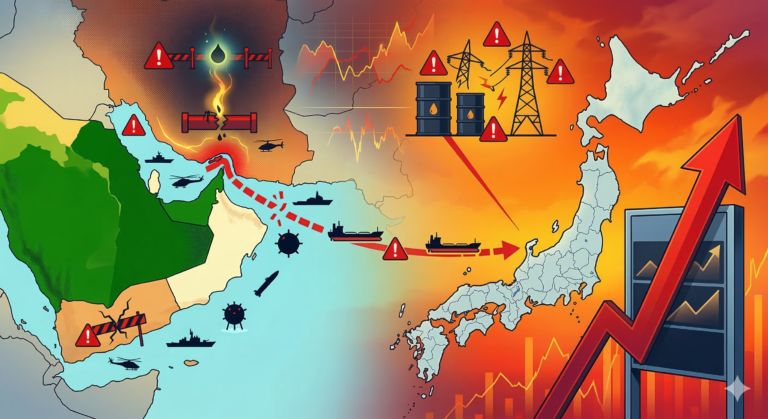
• The latest Strait of Hormuz crisis grew out of expanding U.S. and Israeli military action against Iran, followed by Iranian pressure around the waterway, turning a regional war into a broader global energy security shock.
• Washington is not asking allies for symbolic backing alone. The real request involves dangerous missions such as escort operations and mine-clearing, which carry the risk of direct attack and escalation.
• Japan now faces three overlapping constraints at once: heavy dependence on Middle Eastern energy, constitutional and legal limits on overseas military action, and the need to preserve alliance credibility with the United States.
News
Prime Minister Sanae Takaichi said on March 16 that Japan is not currently planning naval escort missions to the Strait of Hormuz, even as U.S. President Donald Trump has pressed allies to help secure the strategic waterway.
Tokyo said it is still considering what actions may be possible within Japan’s constitutional and legal framework. The statement came as the war involving the United States, Israel, and Iran continued to destabilize maritime traffic around the Strait of Hormuz, one of the world’s most important energy chokepoints.
Trump has called on countries including Japan, Australia, South Korea, the United Kingdom, and China to share the burden of restoring maritime security. But responses have remained cautious. Japan has ruled out an immediate escort deployment, Australia has also declined to send ships, and other governments have stopped short of committing to direct military involvement in the Strait itself.
Related Article
Background
How the Iran war turned into a Strait of Hormuz crisis
The current crisis did not begin as a maritime dispute. It emerged after expanding U.S. and Israeli military action against Iran widened the scope of the conflict and pushed the confrontation beyond direct strikes on military and strategic targets.
Iran’s response has not been limited to direct retaliation. Pressure around the Strait of Hormuz has turned the waterway itself into a geopolitical lever. That matters because once the Strait becomes unstable, the damage spreads far beyond the battlefield and into oil markets, shipping, insurance, inflation, and industrial costs.
Why the Strait of Hormuz matters to Japan and the world
The Strait of Hormuz remains one of the most important maritime chokepoints in the global economy because a major share of oil and LNG exports passes through it. Once shipping through the Strait becomes unreliable, the impact quickly moves beyond energy prices alone.
Insurance costs rise, shipping routes lengthen, freight rates increase, and inflation pressure spreads through transport, manufacturing, and household energy bills. For Japan, the risk is especially severe because its economy remains heavily exposed to Middle Eastern energy supplies.
That is why instability in Hormuz is not a distant foreign policy issue for Japan. It feeds directly into gasoline prices, electricity costs, import bills, and the broader cost of living.
Why the threat environment is more dangerous than before
The danger in Hormuz is no longer defined only by the old image of a simple mine blockade. The threat environment has changed. Drones, missile attacks, and persistent uncertainty over safe passage have shifted the core question from whether ships can physically pass to whether they can pass safely and commercially.
That is why Washington’s request is so politically difficult for its partners. Escort missions and mine-clearing operations are not routine patrols. They assume a real possibility of attack, escalation, and casualties. Any government considering such a deployment must think not only about sending ships, but about protecting them, defining rules of engagement, and preparing for the consequences if the mission expands.
Why Japan cannot easily send the Maritime Self-Defense Force
Japan’s difficulty is not explained by political caution alone. The country depends heavily on Middle Eastern energy, but it also operates under constitutional and domestic legal limits on overseas military action. Tokyo can support maritime security in limited ways, but deploying forces into a high-risk mission requires much stronger legal and political justification.
The legal debate over Hormuz is not new. During Japan’s 2015 security legislation debate, policymakers discussed whether a mine blockade in the Strait could qualify as a survival-threatening contingency for Japan. The difference in 2026 is that the issue is no longer hypothetical. The operational question is now immediate: how much real-world danger is Japan prepared to accept for alliance management and energy security.
That is why Japan’s current position is not simply about saying no. It is about avoiding front-line missions such as direct escort or mine-clearing while keeping open the possibility of more limited forms of involvement, including information gathering and maritime monitoring in surrounding waters.
Why allied caution reveals a deeper shift in alliance politics
The muted response from U.S. partners reveals something larger than temporary hesitation. Many governments understand the importance of open shipping lanes, yet far fewer are willing to convert that concern into immediate military participation.
That shift shows how alliance behavior is changing. In an earlier era, a U.S. request might have produced quicker and more automatic alignment. Now, governments are weighing domestic politics, legal constraints, military exposure, and economic vulnerability before deciding how far they are willing to go.
The question is no longer whether allies support Washington in principle. The real question is how much cost, danger, and strategic liability they are willing to absorb in practice.
Why China could still gain relative advantage despite its own exposure
China is not insulated from Hormuz instability. It also remains vulnerable to Gulf energy disruption, which means a prolonged crisis can raise costs for Chinese industry and weigh on economic growth. That is why portraying Beijing as a simple winner would be misleading.
At the same time, China may still gain relative strategic room if the United States is pulled deeper into Middle Eastern crisis management. The longer Washington must spend military, diplomatic, and political capital on Hormuz and Iran, the more strategic space Beijing may gain in Asia-Pacific competition and in the broader contest for global influence.
China, in other words, is not an untouched beneficiary. It is a country that can suffer real costs while still benefiting from America’s heavier burden.
Why Japan’s real challenge goes beyond one deployment decision
The core challenge for Japan is not simply whether to send ships. The Strait of Hormuz crisis ties together national security, energy policy, shipping insurance, supply chains, and inflation. Even if Tokyo avoids a direct front-line naval role, it cannot avoid the economic consequences of prolonged disruption.
That is why Japan’s long-term response has to be broader than the deployment debate alone. Strategic oil reserves, diversified procurement, support for private shipping, maritime risk management, and sustained diplomacy with Middle Eastern producers all matter.
The crisis is testing whether Japan can act not just as a U.S. ally, but as a state capable of integrated, multi-layered economic security policy in a more unstable multipolar world.
Conclusion
Trump’s push for allied burden-sharing in the Strait of Hormuz is about more than naval deployments. It is exposing the hard limits of alliance politics in a high-risk, high-cost conflict.
For Japan, the crisis brings three realities into the same frame: dependence on Middle Eastern energy, legal constraints on overseas military action, and pressure to maintain alliance credibility with Washington. That is why the real test ahead is not whether Tokyo says yes or no to one specific U.S. request.
The real test is whether Japan can build a broader statecraft strategy that combines diplomacy, energy resilience, logistics planning, and economic security in a more unstable world.
See you in the next article.
References
- Japan not planning Hormuz escort mission, PM Takaichi says(Reuters)
- Trump demands others help secure Strait of Hormuz, Japan and Australia say no plans to send ships(Reuters)
- US is quickly exhausting tools to absorb Iran war oil shock(Reuters)
- EU weighs action to keep Strait of Hormuz open(AP News)
- EU’s Kallas floats Black Sea model to unblock Strait of Hormuz(Reuters)